Equations with no solution are a fascinating topic in algebra, presenting a unique set of challenges for mathematicians and researchers. These equations, by definition, do not have a valid solution that satisfies the given conditions. In this article, we will delve into the world of equations with no solution, exploring their characteristics, implications, and the methods used to identify them. The study of such equations is crucial in various fields, including physics, engineering, and economics, where they can help model real-world problems and make accurate predictions.
Context and Definition
Equations with no solution can arise in various mathematical contexts, including linear and nonlinear equations, differential equations, and algebraic equations. A key aspect of these equations is that they do not have a real or complex solution that satisfies the equation. For instance, the equation $x^2 + 1 = 0$ has no real solution, as there is no real number that can be squared to give -1. However, this equation does have complex solutions, namely $x = \pm i$, where $i$ is the imaginary unit.

Methods for Identifying Equations with No Solution
Identifying equations with no solution requires a combination of mathematical techniques and analytical skills. One common approach is to use algebraic manipulation to simplify the equation and determine if it has any solutions. For example, the equation $x + 1 = x$ can be simplified to $1 = 0$, which is a contradiction, indicating that the equation has no solution. Another approach is to use graphical methods, such as plotting the equation on a graph, to visualize the equation and determine if it has any solutions.
Implications and Applications
Equations with no solution have significant implications in various fields, including physics, engineering, and economics. In physics, equations with no solution can model systems that are impossible or unstable, such as a pendulum with a negative length. In engineering, equations with no solution can be used to design systems that are robust and fault-tolerant. In economics, equations with no solution can model economic systems that are unstable or unsustainable. 
Conclusion and Future Directions
In conclusion, equations with no solution are an important area of study in mathematics, with significant implications and applications in various fields. Further research is needed to develop new methods and techniques for identifying and analyzing equations with no solution. Additionally, the study of equations with no solution can provide insights into the nature of mathematical truth and the limits of mathematical modeling. As our understanding of equations with no solution continues to evolve, we can expect new breakthroughs and applications in fields such as physics, engineering, and economics.
4 Ways To Solve Systems Of Equations - WikiHow

4 Ways to Solve Systems of Equations - wikiHow
Algebra 37 - Solving Systems Of Equations By Elimination - Abode Of
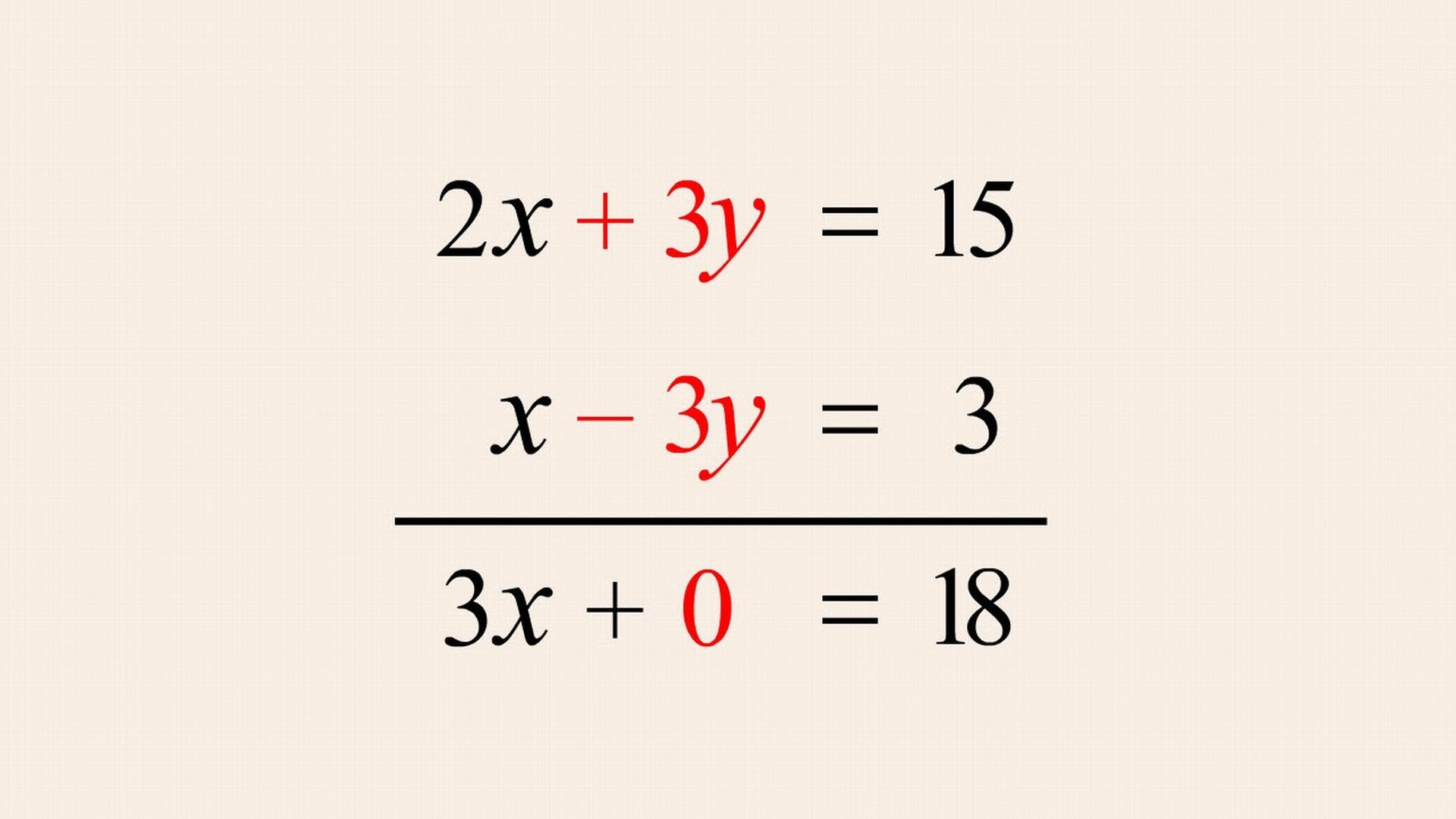
Algebra 37 - Solving Systems of Equations by Elimination - Abode of ...
Solving Two-Step Equations Math Poster/Reference Sheet By Cayla Panochko

Solving Two-Step Equations Math Poster/Reference Sheet by Cayla Panochko